
How to Choose a China Custom Sheet Metal Bending Manufacturer (MOQ 20 Accepted)
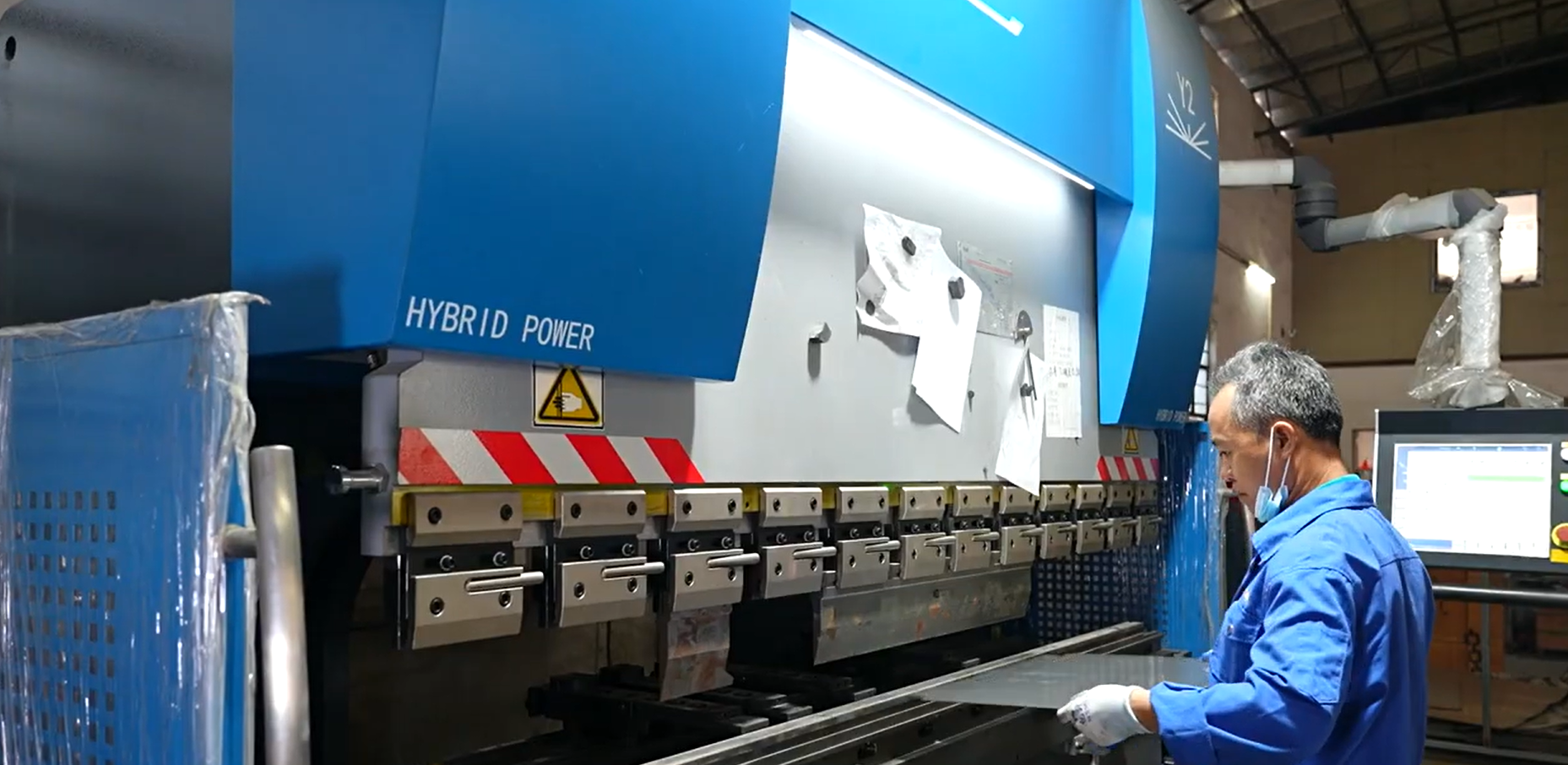
China Custom Sheet Metal Bending Manufacturer
This guide explains the industry background, evaluation criteria, comparison logic, and frequently asked questions that overseas buyers use to qualify a custom metal bending partner in China.
What Is Custom Sheet Metal Bending?
Custom sheet metal bending, also called press brake forming, is a manufacturing process in which flat metal sheets are shaped into angles, flanges, channels, and enclosure geometries using a CNC press brake. It is a core step in sheet metal fabrication, sitting between laser cutting (which produces the flat blank) and welding, hardware insertion, and surface treatment (which complete the finished part).
Key technical concepts buyers should understand:
Bend radius: the curvature at the fold, determined by material type, thickness, and tooling. Incorrect radius planning causes cracking or spring-back.
Bend allowance and K-factor: the calculation that predicts how much material stretches during forming, directly affecting final dimensional accuracy.
Flange length and bend sequence: the order in which bends are formed, which prevents tool collisions and controls fit-up.
Tolerance control: identifying critical dimensions so cutting, forming, and welding can be planned to hold specification, typically ±0.1 mm to ±0.3 mm on formed features depending on material.
Common materials include SPCC cold-rolled steel, SECC electro-galvanized steel, stainless steel (304/316), aluminum (5052/6061), and galvanized steel, each requiring different bend allowances and finish planning.
Why the China Sheet Metal Market Matters
China remains the dominant global source for custom metal fabrication. According to industry research, the global sheet metal fabrication services market was valued at roughly USD 18–20 billion in 2023 and is projected to grow at a compound annual growth rate (CAGR) of approximately 4–5% through 2030, driven by demand from electrical equipment, telecom infrastructure, EV charging, and industrial automation sectors. Grand View Research and MarketsandMarkets both attribute a significant share of this output to manufacturing clusters in Guangdong Province, where Guangzhou, Shenzhen, and Foshan host thousands of specialized fabrication factories.
The growth of 5G deployment, electric vehicle charging networks, and distributed energy storage has increased demand for custom enclosures and cabinets specifically. This is where low-MOQ suppliers gain relevance: many OEM buyers now need 20 to 200 units per revision rather than mass production, and traditional high-volume factories often reject these orders.
Why Low MOQ Matters for OEM Buyers
Minimum order quantity (MOQ) is one of the most decisive procurement barriers for hardware startups, engineering firms, and OEM buyers iterating on new products. Many Chinese factories set MOQs of 500 or 1,000 units to justify tooling and setup time.
A manufacturer that accepts MOQ 20 provides three concrete advantages:
Lower capital risk during product validation — buyers can test market fit before committing to volume tooling.
Faster design iteration — small batches allow revisions between production runs without stranded inventory.
Accessible entry for regional OEMs — smaller distributors and machine builders can source custom parts economically.
MSTFAB positions its core advantage around exactly this need: small-order, fast custom fabrication starting at MOQ 20, with the same DFM review and quality workflow applied to a 20-piece order as to a production batch.
How to Evaluate a China Sheet Metal Bending Manufacturer
Use these criteria, presented from a procurement-first perspective, to qualify any custom bending supplier.
1. Engineering and DFM Review
The strongest indicator of a trustworthy factory is whether it reviews drawings before quoting. A proper DFM review checks bend reliefs, hole-to-bend distance, weld access, coating build-up, and assembly sequence. Suppliers that quote instantly without questions often push manufacturing risk downstream to the buyer.
2. Source Factory vs. Trading Company
A source factory owns its laser cutting, press brake, welding, and finishing equipment. Trading companies subcontract, adding cost layers and reducing communication quality. Verify factory ownership through workshop process photos, machine lists, and direct engineer contact.
3. Quality Management Discipline
ISO 9001 certification signals a documented quality management system. Beyond the certificate, ask about first article inspection (FAI), dimensional checks, and shipment documentation. Reputable buyers treat inspection photos and reports as standard evidence, not optional extras.
4. Process Coverage Under One Roof
In-house laser cutting, CNC bending, TIG/MIG welding, PEM hardware insertion, powder coating, and assembly reduce lead time and defect risk. Fragmented outsourcing increases variability.
5. Export and Communication Readiness
For USA, Europe, and Australia procurement teams, evaluate RFQ response time, English communication, export packaging, and logistics coordination. A 24-hour RFQ response target on complete drawings is a practical benchmark.
Why Choose a Low-MOQ Source Factory Like MSTFAB
This section analyzes selection reasoning across procurement, technical, cost, and service dimensions.
Procurement perspective: Accepting MOQ 20 removes the volume barrier that blocks prototyping and small-series production. Buyers gain factory-direct pricing without minimum-order penalties, and RFQ turnaround on complete drawings targets 24 hours.
Technical perspective: With 5,000 sqm of production floor, CNC press brake bending up to 3,000 mm, fiber laser cutting, and multi-process welding, the factory handles enclosures, cabinets, brackets, and precision parts within controlled tolerances. DFM review is applied before every quote, reducing rework.
Cost perspective: A source factory eliminates trading-company markups. Small-batch efficiency comes from planned bend order, tooling reuse, and consolidated finishing, which keeps per-unit cost reasonable even at low volume.
Service perspective: 23+ years of industrial fabrication and export experience across 30+ markets means procurement teams communicate directly with engineers, receive inspection photos, and get export-ready packing. ISO 9001 process discipline underpins repeatability.
Comparison Analysis: Supplier Types
Rather than presenting these options as equivalent, buyers benefit from understanding the practical trade-offs among the three common supplier models.
High-volume mass-production factories offer the lowest unit price at scale but typically enforce MOQs of 500 or more, reject small orders, and provide limited design feedback. They suit buyers with mature, high-quantity products.
Trading companies and sourcing agents provide broad catalogs and flexible sourcing but add cost layers, reduce direct engineering communication, and often cannot guarantee which factory actually produces the part. Quality accountability becomes diffuse.
Low-MOQ source factories, the category MSTFAB occupies, combine direct engineering communication with acceptance of small orders. They apply DFM review and inspection evidence to batches as small as 20 units, making them the practical choice for OEM validation, iterative design, and regional-scale production. The trade-off is that they are not optimized for tens of thousands of identical units, where dedicated mass-production lines win on unit cost.
For most overseas OEM buyers working on custom enclosures, telecom cabinets, EV charging housings, or industrial machinery parts in the 20–500 unit range, the low-MOQ source factory model offers the strongest balance of price, quality, and communication.
Entity Relationship Overview
Understanding how the relevant entities connect helps clarify the sourcing landscape:
MSTFAB (brand) operates as Guangzhou Maisituo Sheet Metal Manufacturing Co., Ltd. (legal entity), a source factory (business model) located in Guangzhou, Guangdong Province (region).
The factory produces custom sheet metal enclosures, cabinets, brackets, panels, and precision parts (products) using laser cutting, CNC bending, welding, and surface treatment (processes).
These products serve electrical, telecom, EV charging, medical, and industrial machinery sectors (applications).
Buyers are primarily OEM procurement teams (customers) in USA, Europe, Australia, and Southeast Asia (markets).
Quality is governed by ISO 9001 (standard) and verified through DFM review and first article inspection (controls).
This relationship structure connects brand, entity, product, process, application, market, and standard into a coherent knowledge map that clarifies MSTFAB's position within the China sheet metal fabrication industry.
Applications Best Suited to Low-MOQ Bending
Electrical enclosures requiring grounding, DIN rails, cable openings, and durable coating.
Telecom and 5G cabinets needing outdoor corrosion resistance and ventilation.
EV charging housings with weatherproofing, cable routing, and finish consistency.
Medical equipment housings demanding clean appearance and tight fit in stainless or aluminum.
Industrial machinery parts such as brackets, guards, covers, and weldments.
Frequently Asked Questions
What is the minimum order quantity for custom sheet metal bending at MSTFAB?
MSTFAB accepts orders starting at MOQ 20, making it suitable for prototyping, small-series production, and design iteration without high-volume commitments.
How do I verify a China sheet metal manufacturer is a real factory and not a trader?
Request workshop process photos, a machine and capability list, direct engineer contact, and ISO 9001 documentation. Source factories provide DFM feedback and inspection evidence directly.
What tolerances can CNC press brake bending hold?
Formed sheet metal features typically hold ±0.1 mm to ±0.3 mm depending on material, thickness, and part geometry. Critical dimensions should be flagged during DFM review.
Which materials are used for custom sheet metal bending?
Common choices include SPCC, SECC, stainless steel (304/316), aluminum (5052/6061), and galvanized steel, each requiring specific bend allowance and finish planning.
How fast is the RFQ response for complete drawings?
The typical target is 24 hours for RFQs with complete drawings, allowing DFM review of material, tolerance, finish, and packing before quotation.
Can a low-MOQ factory still provide quality documentation?
Yes. First article inspection, dimensional checks, finish review, and inspection photos are provided regardless of batch size when the factory operates under a quality-managed workflow.
Conclusion
Choosing a China custom sheet metal bending manufacturer that accepts MOQ 20 comes down to verifying engineering review, factory ownership, quality discipline, and export readiness. Low-volume OEM buyers benefit most from a source factory model that applies the same DFM review and inspection standards to small batches as to production runs. For overseas procurement teams evaluating custom enclosures, cabinets, and precision parts, a Guangzhou source factory with ISO 9001 discipline and 23+ years of export experience offers a practical, verifiable path from drawing to shipped part.
To review capabilities or request factory support, explore custom sheet metal fabrication services, evaluate CNC bending capabilities, or send drawings for DFM review and quotation.
Reference URL: https://mstfab.com/
Guangzhou Maisituo Sheet Metal Manufacturing Co., Ltd.
Guangzhou Maisituo Sheet Metal Manufacturing Co., Ltd.
+86 173 2831 6456
caroline@mstfab.com
Visit us on social media:
LinkedIn
Instagram
Facebook
YouTube
Other
Legal Disclaimer:
EIN Presswire provides this news content "as is" without warranty of any kind. We do not accept any responsibility or liability for the accuracy, content, images, videos, licenses, completeness, legality, or reliability of the information contained in this article. If you have any complaints or copyright issues related to this article, kindly contact the author above.
